

The Colorado state legislature will convene for the 2026 session on January 14th. Lawmakers are grappling with a projected $1.2 billion shortfall in the state budget due in part to changes in funding at the federal level. Some budget experts estimate that after removing potential surplus, lawmakers still must find $783 million in savings to meet the constitutional requirement to balance the budget.
A hot topic that will draw a lot of debate is continual funding for Medicaid. Medicaid funding makes up 36% of the state’s budget when state and federal dollars are combined and supports critical services for families, people with disabilities, and older adults.
In a recent episode of Aging Unscripted, we unpacked the complicated funding structure behind Medicaid, what happens when federal dollars are reduced, and why these decisions matter deeply for older adults, families, and care providers across Colorado.
This is not an abstract policy discussion—it’s about real people, real services, and the future of aging care.

Understanding the Big Picture: How Medicaid Funding Works
In Colorado, Medicaid is jointly funded by the federal government and the states. Federal dollars flow to states based on a matching formula – roughly 50/50 on average. States then determine how those funds are allocated across services such as long-term care, nursing homes, assisted living, and in-home support as well as support families, people with disabilities, and emergency services.
Lawmakers have a few options available to reduce the Medicaid spend in Colorado:
- Cut services or reimbursement rates
- Shift funds from other programs
- Raise taxes or fees
- Limit eligibility or benefits
Legislators may pursue a combination of these options or may propose something entirely new. Regardless, all options will impact Coloradans and could impact many older adults across the state.

Budget Pressures and Competing Priorities
State leaders are constantly balancing competing demands: education, transportation, public safety, healthcare, and more. Protecting services for older adults often means making intentional choices to prioritize long-term care in the budget.
At the same time, Colorado’s population is aging rapidly; residents over the age of 75 are projected to grow 56% in the next 10 years, more than any other age group in the state according to the state’s demographic office. The need for senior housing and services is not shrinking; it’s growing. More adults are living longer, often with complex health needs that require coordinated, consistent care. Budget priorities must evolve to reflect this demographic reality, not lag behind it.
What Medicaid Cuts Mean for Older Adults and Families
Christian Living Communities (CLC) supports approximately 160 older Coloradans who receive Medicaid assistance, providing housing and care in assisted living or skilled nursing communities such as Someren Glen,Clermont Park,Dayspring Villa,Cappella of Pueblo West, and Sunny Vista.
Medicaid reimburses approximately 70-80% of the actual cost of care for older adults in our communities. Some of these shortfalls are simply absorbed by the communities; however, this erodes the financial sustainability of these critical services and CLC’s continued ability to serve lower income older adults.
We are not the only organization facing a worrisome future when it comes to serving Colorado’s lower income older adults; when Medicaid funding is reduced, the impact is widespread and shows up quickly and personally:
- Older adults may face fewer care options or longer wait times
- Nursing homes and assisted living communities participating in the Medicaid program may struggle to remain financially viable and stay open
- Families may be left filling gaps with unpaid care
In Colorado, 19 skilled nursing communities serving Medicaid-eligible elders have closed since 2020 due to financial hardship. Without adequate nursing home capacity, older Coloradans may face extended hospital stays—an outcome that is costly, burdensome for hospitals, and often associated with irreversible cognitive and physical decline. These delays also reduce hospital bed availability, affecting access to care for all Coloradans.
If Medicaid assisted living communities close, the situation is even more dire; these are people who may not need nursing home levels of care but are not safe living on their own. Without Medicaid assisted living options, some face homelessness.
“I will not last more than three days on the streets. I worked as an educator my whole life. I saved for retirement, but my unforeseen illness has eaten up all those savings. I only have Social Security. If I don’t have support through Medicaid, I will have nowhere else to go,” shares a resident of Dayspring Villa, an assisted living community in northwest Denver where 90% of residents receive Medicaid assistance.
The Power of Civic Engagement and Advocacy
Budget decisions don’t happen in a vacuum. Citizens, advocates, and organizations all play a role in shaping outcomes.
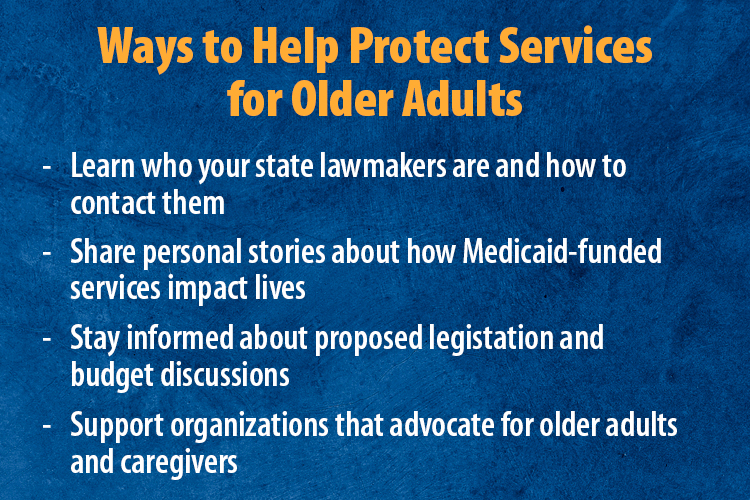
If you’re concerned about protecting services for older adults, there are steps you can take now:
- Learn who your state lawmakers are and how to contact them
- Share personal stories about how Medicaid-funded services impact lives
- Stay informed about proposed legislation and budget discussions
- Support organizations that advocate for older adults and caregivers
At CLC, we want to make taking action easy for you. Here are some helpful links and ideas:
- Listen to our 30-minute podcast, The Fight for Funding: Seniors, Medicaid, and the Road Ahead, with guest Doug Farmer, President & CEO of Colorado Healthcare Association, as we make sense of this challenging funding landscape.
- This link takes you to the podcast page. Under the description for Episode 10 – The Fight for Funding: Seniors, Medicaid, and the Road Ahead, you will find links to several resources to learn more about the issue and to take action.
- You can also watch this video, The Empathy & Education Project’s first episode – Seniors in Crisis. Professor Carey Candrian talked to residents at our Dayspring Villa community about how worried they are about the Medicaid funding decisions looming this session.
- You can always share links to both the podcast and the education video with your lawmaker along with your valuable message to protect Medicaid funding for older adults. It can be as simple as a few clicks if you visit the Find My Legislator page of the state’s website, you can search by your address, and most lawmakers have an email option to share your message and links, or you can call them.
Together, organizations that serve older adults and individuals who care about older adults have an opportunity to amplify the voices of those most affected by funding decisions. Advocacy is strongest when it reflects lived experience.
Looking Ahead: Why This Affects Everyone
As we look toward the upcoming legislative session, there is cautious optimism—but also urgency. Protecting senior services will require awareness, collaboration, and sustained advocacy.
For those who believe Medicaid cuts won’t affect them personally, consider this: aging is not a niche issue. It touches every family, every community, and eventually, every individual. The systems we build—or dismantle—today will shape the care available tomorrow.
The question isn’t whether Medicaid funding matters. The question is whether we are willing to act in time to protect the dignity, health, and well-being of older adults.
To hear the full conversation and learn how you can get involved, listen to this episode of Aging Unscripted.
About the Author
Pam Sullivan, Vice-President of Strategy and Communications, joined the team in 2004 in the Donor Relations department. Since then, she has held various positions include Donor Relations Director, Executive Director of Marketing and Vice-President of Engagement. Pam is responsible for internal and external communications, branding and brand messaging, crisis communication and guiding and supporting strategic initiatives.